

by Ioana Maria Cortea — Published on May 14, 2026 — Reading time: 12 min
Article sections
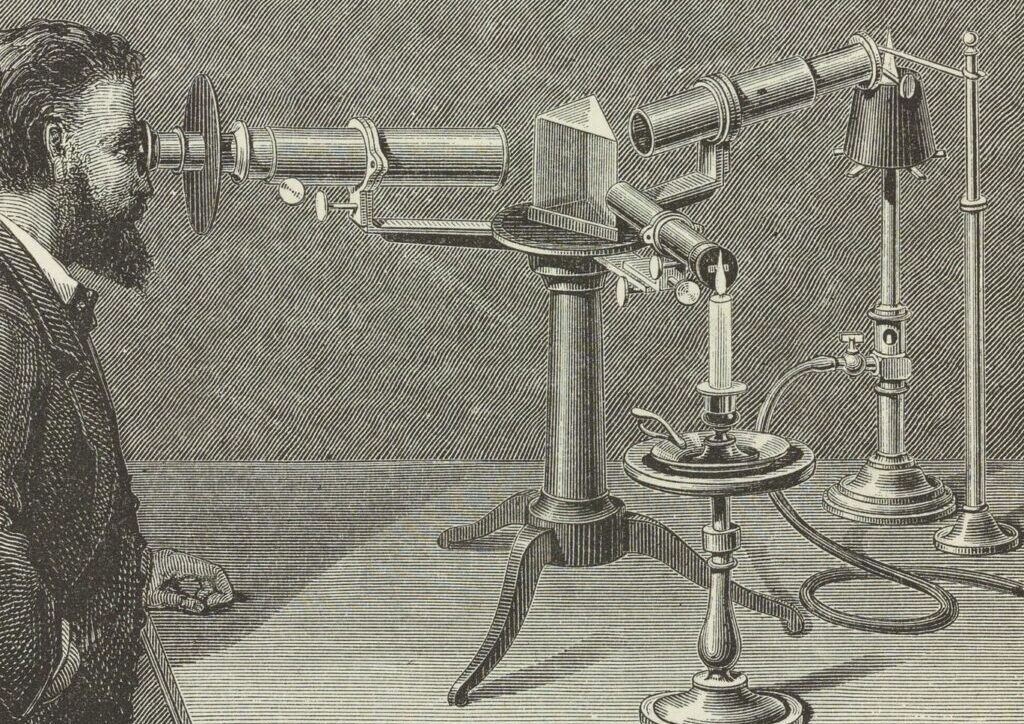
Infrared spectroscopy has long been one of the most widely used analytical techniques for material identification, with IR spectra serving as unique molecular “fingerprints” that enable compounds to be identified through their characteristic absorption patterns.
The foundations of infrared spectroscopy date back to the early 20th century, when William Weber Coblentz demonstrated how infrared radiation interacts with matter and recognized its potential for chemical analysis. Coblentz recorded some of the first infrared spectra and began compiling spectral data for a wide range of compounds, laying the groundwork for modern spectral identification. Although the first commercially viable IR spectrometers only became available in the 1940s, the technique evolved rapidly throughout the 20th century. The introduction of FTIR spectrometers in the mid-1960s revolutionized the field by significantly improving speed, sensitivity, and spectral resolution, while the widespread adoption of attenuated total reflectance (ATR) techniques in the late 1980s further simplified sample preparation and expanded analytical applications.
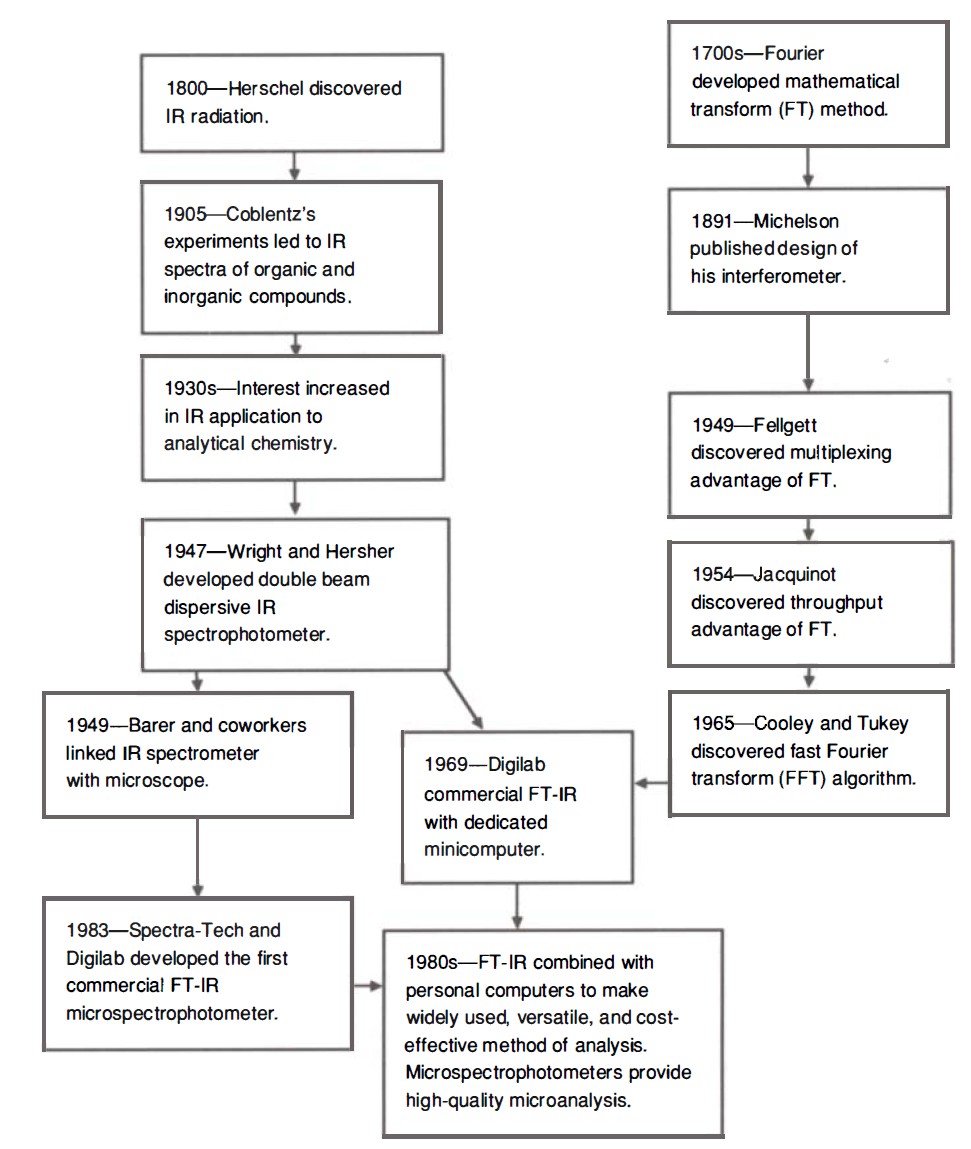
Despite being a mature analytical technique, FTIR spectroscopy continues to evolve today, with new instrumentation, analytical workflows, and applications emerging every year. Yet the interpretative power of FTIR spectroscopy has always depended on one essential element: access to reliable reference spectra.
For decades, spectral libraries have formed the backbone of spectroscopic identification. Their evolution — from printed catalogues to sophisticated digital infrastructures and increasingly open-access data ecosystems — mirrors the broader transformation of analytical science itself. As instrumentation advanced, so too did the need for curated, standardized, and accessible spectral datasets.
While commercial spectral collections have expanded considerably over time, they have primarily focused on industrial materials and applications, leaving niche domains such as conservation and heritage science underrepresented. This article explores the evolution of infrared spectral libraries — from early printed catalogues to modern FAIR-oriented digital databases — and highlights how initiatives such as INFRA-ART are helping expand spectral resources for cultural heritage research through industry collaborations such as the recent partnership with Wiley Science Solutions.
The emergence of infrared spectral libraries
The history of infrared spectral collections began long before modern FTIR instrumentation. Some of the earliest infrared spectral catalogues appeared in the late 19th century, including the pioneering work of Abney and Festing in 1881 and the influential spectral collections published by William Coblentz between 1905 and 1908.
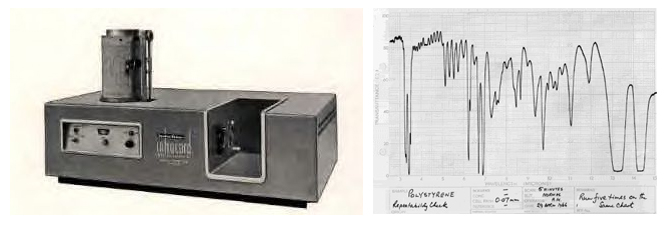
As infrared spectroscopy became increasingly important for chemical structure analysis, the number of recorded spectra expanded rapidly. Early collections were distributed in printed form as books, card indexes, slides, and microfilms. As IR spectral collections grew, searching for information became increasingly time-consuming. To improve organization, perforated cards and sorting machines were introduced to index spectra data. The first catalogues of this kind were developed around 1950 by the Wyandotte Chemical Corporation and the American Society for Testing and Materials (ASTM), contained 150,000 IR absorption spectra stored on Hollerith cards, including details such as band locations, chemical classifications, and formulas. This was followed one year later by the Documentation of Molecular Spectroscopy (DMS) catalog created by Institute of Applied Spectroscopy in Dortmund and the Institute of Molecular Spectroscopy in London.
The transition from printed catalogues to computer-based spectral libraries represented a major shift in analytical science. Early digital systems stored selected spectral band parameters, while later databases archived fully digitized spectral curves, enabling exact spectral reproduction and automated comparison between spectra.
Several organizations played an important role in shaping modern spectral databases. Among the most influential was Sadtler Research Laboratories which became one of the leading providers of infrared reference spectra. Other major contributors included Aldrich-Nicolet, Sigma-Nicolet, the Coblentz Society, and the Japan Information Processing Service (IRSPAN) among others.
| Name of database | Database developer | Number of IR spectra |
| IR base | Academy of Science of the USSR, Siberian Division, Novosibirsk, USSR | 1000 |
| COSMOSS | Boris Kidriˇc Chemical Institute, Ljubljana, Slovenia | 102,000 |
| POLYMER | Boris Kidriˇc Chemical Institute, Ljubljana, Slovenia | 740 |
| Sadtler Digital-4IR | Sadtler Research Laboratories, Philadelphia, PA, USA | 100,000 |
| Sadtler VARIMAT 8*16 | Sadtler Research Laboratories, Philadelphia, PA, USA | 100,000 |
| Sadtler De Res 32IR | Sadtler Research Laboratories, Philadelphia, PA, USA | 100,000 |
The digital transformation of spectral analysis
The introduction of the first commercial FTIR spectrometers in 1969 (Digilab Model FTS-1) fundamentally changed how spectral data could be acquired, processed, and interpreted. Compared with earlier dispersive infrared instruments, FTIR systems offered improved sensitivity, faster acquisition times, and greater spectral precision. Equally important was the integration of digital computing into spectroscopic workflows. Spectral libraries thus evolved from static reference collections into active computational tools capable of supporting automated compound identification.
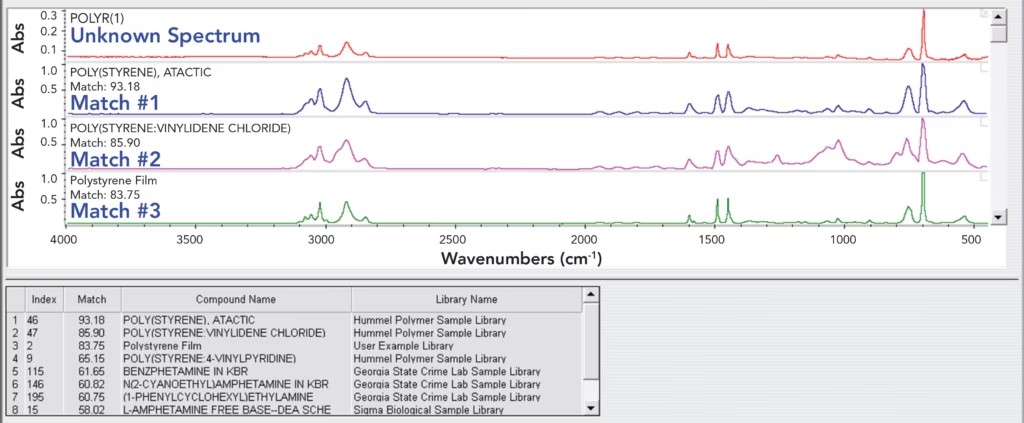
Library-search algorithms became one of the most important applications of digital spectral infrastructures. In these systems, the spectrum of an unknown material is compared against large collections of reference spectra to identify identical or closely related compounds. The success of this approach depends heavily on the quality, consistency, and breadth of the reference database. As spectra began to be acquired at a much faster rate, spectral collections started to become increasingly specialized. Beyond general chemical libraries, dedicated collections were developed especially for the coating industry, including polymers and related compounds, plasticizers and other additives.
The importance of quality and standardization
The development of large spectral collections was never a simple endeavor. Constructing and maintaining a high-quality database requires long-term motivation, scientific justification, funding, coordination, and sustained organizational effort. Beyond collecting spectra, these data collections depend on rigorous quality control, metadata management, and continuous updating to remain scientifically reliable and relevant. As spectral databases expanded rapidly during the late 1970s, concerns regarding data quality and reproducibility, became increasingly important. Early infrared collections often suffered from inconsistent acquisition conditions, limited metadata, low spectral resolution, and poor sample preparation.
The reliability of a spectral library depends not only on the spectra themselves, but also on the quality control procedures underlying their acquisition. Reference spectra must be generated under carefully controlled conditions, using validated instrumentation, standardized preparation methods, and properly characterized samples. Major infrared databases such as the Sadtler collections introduced rigorous evaluation procedures addressing sample purity, instrument calibration, reproducibility, and contamination control before spectra were included in the database.
Metadata also play a central role in ensuring the long-term scientific value of spectral datasets. Important contextual information includes sample provenance, acquisition parameters, spectral resolution, instrument type, preparation method, and other environmental variables. Without such information, even technically accurate spectra may have limited interpretative value or reproducibility. Standardization efforts further transformed spectral data collections. One of the most important developments was the adoption of the JCAMP-DX format in the late 1980s, which enabled spectral data exchange across different software systems and instrument manufacturers.
| Design criteria for the JCAMP-DX file format |
|---|
| Accurately represent digital output from dispersive, FTIR, tunable filter, and laser spectrometers, including spectra, interferograms, transformed spectra, and peak tables. |
| Store descriptive metadata such as sample identity, preparation methods, instrument parameters, computational procedures, and comments. |
| Provide clear, human-readable internal documentation. |
| Ensure compatibility across diverse communication systems, and storage media. |
| Allow flexible and expandable data fields, including support for adding new fields as standards evolve. |
| Define specifications precisely enough for independently developed software to reliably read and write JCAMP-DX files. |
| Adapted from McDonald and Wilks, 1988 |
Expanding access to IR spectral collections of art-related materials
Despite the remarkable growth of commercial spectral libraries, art- and conservation-related materials have remained underrepresented within large analytical collections. Most commercial libraries were originally developed for industrial chemistry, pharmaceuticals, polymers, or forensic science. Artists’ materials — including pigments, dyes, binders, varnishes, and restoration materials — are still insufficiently represented. The challenge is therefore not only one of data quality, but also one of representation, as even large and technically sophisticated spectral libraries may have limited applicability in conservation or heritage science if historically relevant materials are missing.
The INFRA-ART Spectral Library project initiative emerged in response to this gap by developing curated spectral resources specifically tailored to cultural heritage research and conservation science. Designed as a digital support tool for heritage science specialists, the INFRA-ART database prioritizes broad material coverage, analytical quality, and rich contextual metadata. By focusing specifically on materials commonly encountered in works of art, archaeological artifacts, and other cultural heritage objects, the INFRA-ART database addresses a longstanding limitation of generalized commercial collections.
At present, the INFRA-ART platform includes more than 1000 FTIR reference spectra spanning a wide range of heritage-related materials. Furthermore, by integrating complementary spectroscopic data, the platform provides multidimensional characterization of materials at the elemental, molecular, and structural levels, enabling users to cross-validate analytical results and reduce potential ambiguities in material identification. At the same time, the initiative aligns with broader FAIR-oriented approaches to scientific data management by emphasizing accessibility, and long-term reuse.

Building on these FAIR-oriented principles and with the aim of further increasing access to high-quality art-related spectral data, INFRA-ART recently established a collaboration with Wiley Science Solutions, one of the most trusted partners in the publishing industry for laboratory spectral data.
This partnership resulted in the integration of FTIR reference data from the INFRA-ART database into a new KnowItAll IR Spectral Library Collection dedicated to pigments and dyes. Importantly, this collaboration reflects both the quality and consistency of the INFRA-ART spectral data and the growing demand for reliable reference collections dedicated to heritage and conservation science.
More broadly, the partnership highlights the increasing recognition of cultural heritage science as a distinct analytical domain requiring dedicated spectral resources capable of supporting a wide range of applications such as art conservation, degradation studies, environmental and forensic analysis, and forgery detection. We are proud to contribute to one of the world’s leading IR spectral library resources and to support the wider scientific and heritage science communities, including users of KnowItAll.
As FTIR spectroscopy continues to expand within conservation diagnostics, technical art history, material studies, and preventive conservation research — reaching an increasingly broad user community due to its versatility and cost-effectiveness — collaborative and FAIR-oriented spectral databases will play an increasingly important role in supporting scientific research. In this context, INFRA-ART aims to continue expanding its spectral resources through the development of additional reference collections and broader material coverage, further supporting the needs of the heritage science community.

Further reading and resources
Cortea, I.M. et al. (2023) INFRA-ART: An Open Access Spectral Library of Art-related Materials as a Digital Support Tool for Cultural Heritage Science. ACM Journal on Computing and Cultural Heritage, 16(1): 40. https://doi.org/10.1145/3593427
Dębska, B.J., Guzowska-Świder, B. (2006) Spectral Databases, Infrared. In Encyclopedia of Analytical Chemistry: Applications, Theory and Instrumentation (eds R.A. Meyers and M.L. McKelvy). https://doi.org/10.1002/9780470027318.a5612
Derrick, M.R., Stulik, D., Landry, J.M. (2015) Infrared Spectroscopy in Conservation Science, Getty Conservation Institute.
Griffiths, P.R. (2017) The Early Days of Commercial FT-IR Spectrometry: A Personal Perspective. Applied Spectroscopy, 71(3): 329-340. https://doi.org/10.1177/0003702816683529
Griffiths, P.R., Wilkins, C.L. (1988) Quality Criteria for Digital Infrared Reference Spectra. Applied Spectroscopy, 42(4): 538-545. https://opg.optica.org/as/abstract.cfm?URI=as-42-4-537
Liu, G.L., Kazarian, S.G. (2022) Recent advances and applications to cultural heritage using ATR-FTIR spectroscopy and ATR-FTIR spectroscopic imaging. Analyst, 147(9): 1777-1797. https://doi.org/10.1039/D2AN00005A
McDonald, R.S., Wilks, P.A. (1988) JCAMP-DX: A Standard Form for Exchange of Infrared Spectra in Computer Readable Form. Applied Spectroscopy, 42(1): 151-162. https://doi.org/10.1366/0003702884428734
Sadtler, P., Sadtler, T. (1985) History of “Sadtler” Spectroscopy. Applied Spectroscopy, 39(6): xix-xxii. https://opg.optica.org/as/abstract.cfm?URI=as-39-6-xix
Smith, B.C. (2011) Fundamentals of Fourier Transform Infrared Spectroscopy, 2nd Edition, CRC Press.
Vahur, S., Virro, K., Leito, I. (2005) Web-based Infrared Spectral Databases Relevant to Conservation. Journal of the Canadian Association for Conservation 30: 10-17.
Warr, W.A. (1991) Spectral databases. Chemometrics and Intelligent Laboratory Systems 10(3): 279-292. https://doi.org/10.1016/0169-7439(91)80094-7

How to cite this resource
Cortea, I.M. (2026, May 14). From printed catalogues to digital spectral databases: the evolution of infrared spectral libraries. INFRA-ART Blog. https://blog.infraart.inoe.ro/2026/05/14/from-printed-catalogues-to-digital-spectral-databases-the-evolution-of-infrared-spectral-libraries/