

by Ioana Maria Cortea — Published on March 22, 2026 — Reading time: 10 min

Part of the INFRA-ART Spectral Data Collections article series
Article sections
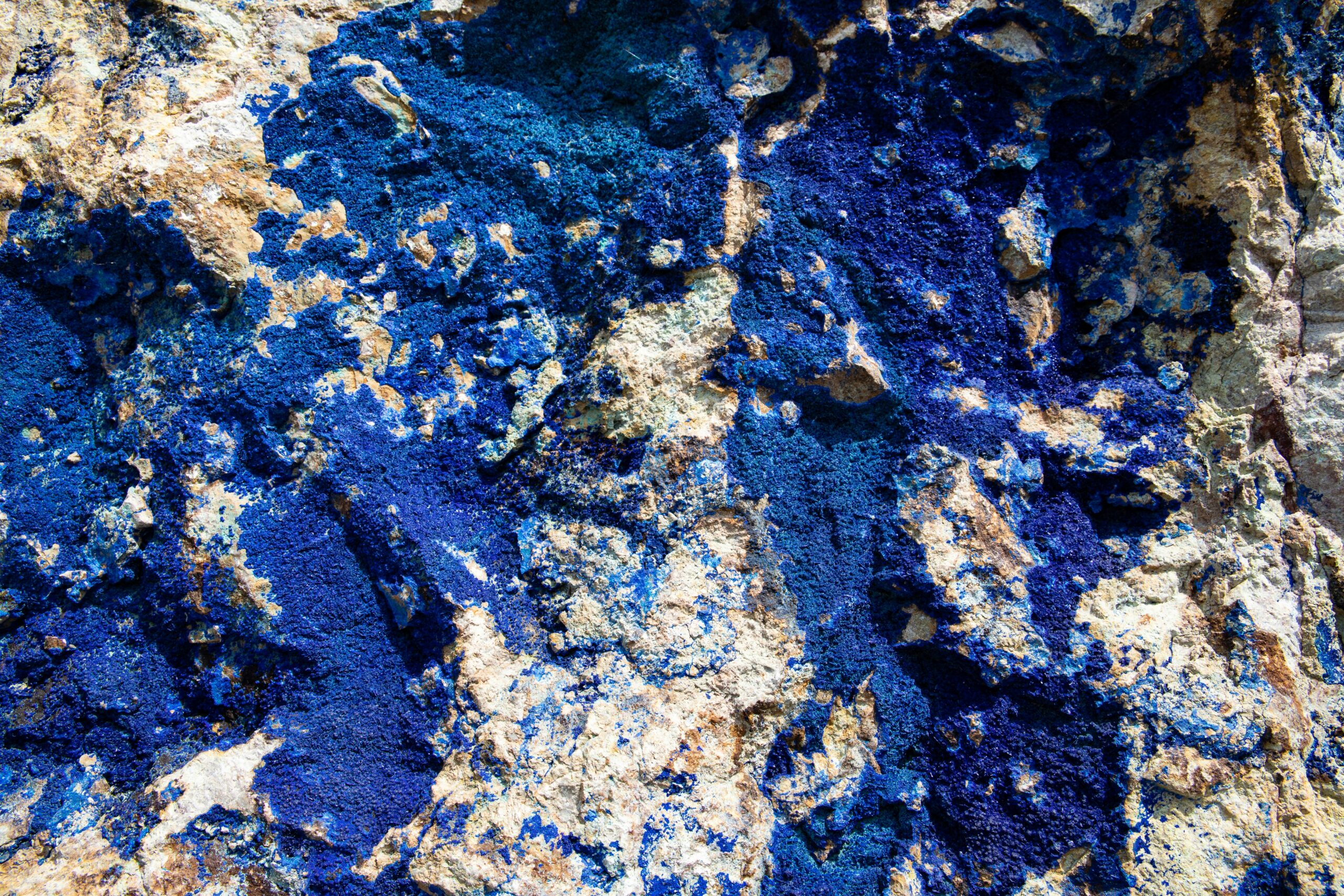
The use of pigments has been fundamental to artistic creation throughout history. From the earliest cave paintings to contemporary practices, artists have continuously sought to expand their visual language by experimenting with both natural and synthetic colorants. This pursuit has often taken the form of a deep fascination—almost an obsession—with discovering, transforming, and refining raw materials into substances capable of producing color.
At their core, pigments are one of the most fundamental means through which artists communicate ideas, emotions, and experiences. Yet they are far more than simple coloring substances. Pigments are tangible expressions of the relationship between humans and the natural world—materials that embody traces of their originating landscapes as well as the marks of human intervention. The evolution of pigments is closely intertwined with scientific innovation, as well as with cultural, social, and economic contexts. Trade routes, resource availability, and cultural exchange—together with advances in chemistry and material processing—have expanded artistic possibilities while shaping how pigments were valued, produced, and used. Some pigments became powerful symbols of wealth, status, and authority, while others came to embody profound symbolic and spiritual meanings. As such, they have left a profound imprint on both artistic practice and cultural history, acting as carriers of both technical knowledge and cultural significance.
Pigments are more than color—they are materials that carry stories of trade, technology, and cultural exchange across centuries. On World Pigment Day, we highlight a selection of fascinating pigments documented in the INFRA-ART database. From precious materials once worth more than gold to highly toxic compounds and rare geological sources, this selection illustrates the extraordinary diversity of substances used in artistic traditions across time.
Prestige pigments: materials of exceptional value
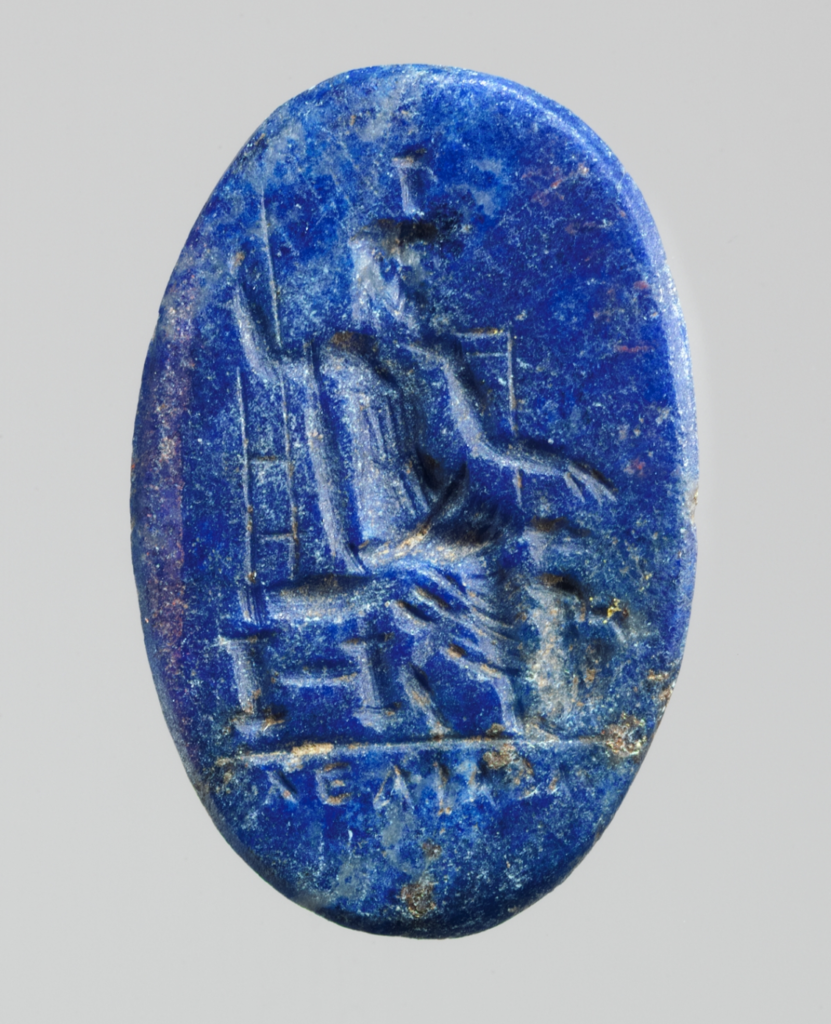
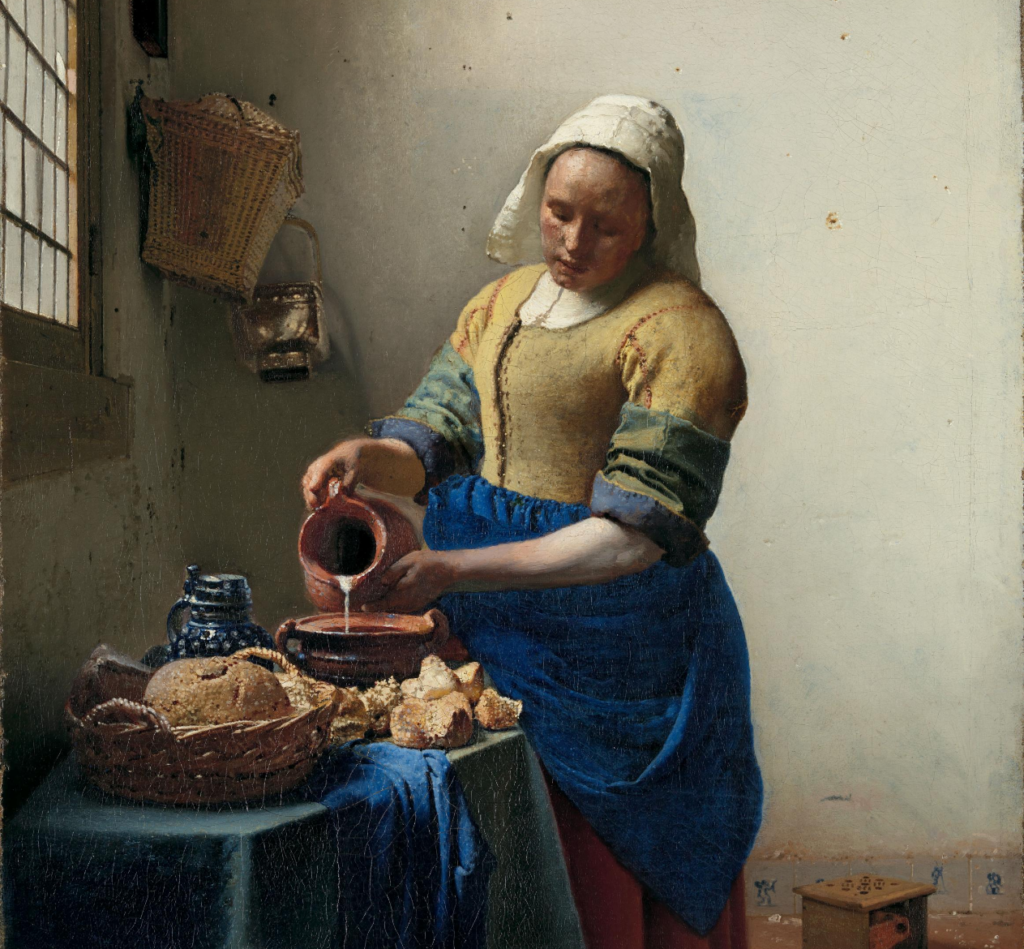
Ultramarine → Oltramarino, the blue from beyond the seas. Derived from the natural mineral lapis lazuli, ultramarine traveled from mines in Afghanistan to Europe along historic trade routes starting with the 13th century. Its use as a pigment, however, dates back even earlier—to the 6th century, in Byzantine manuscripts and Central Asian wall paintings. Cennino Cennini described ultramarine as “a color illustrious, beautiful, and most perfect, beyond all other colors.” Producing this exquisite blue required complex processing: ground lapis lazuli had to be purified to remove impurities such as iron pyrites and calcite. The extraction method is believed to originate in 9th-century Arabic alchemical practice.
So costly during the Renaissance that it could equal or exceed the price of gold, ultramarine became a symbol of prestige. Artists reserved it for the most important subjects—most notably the robes of the Virgin Mary—and often applied it in thin glazes over less expensive underlayers to reduce costs. → The INFRA-ART database includes a wide selection of natural ultramarine samples of varying grades, from Afghan lapis lazuli to Chilean sources, with spectral data primarily covering FTIR and XRF analyses.

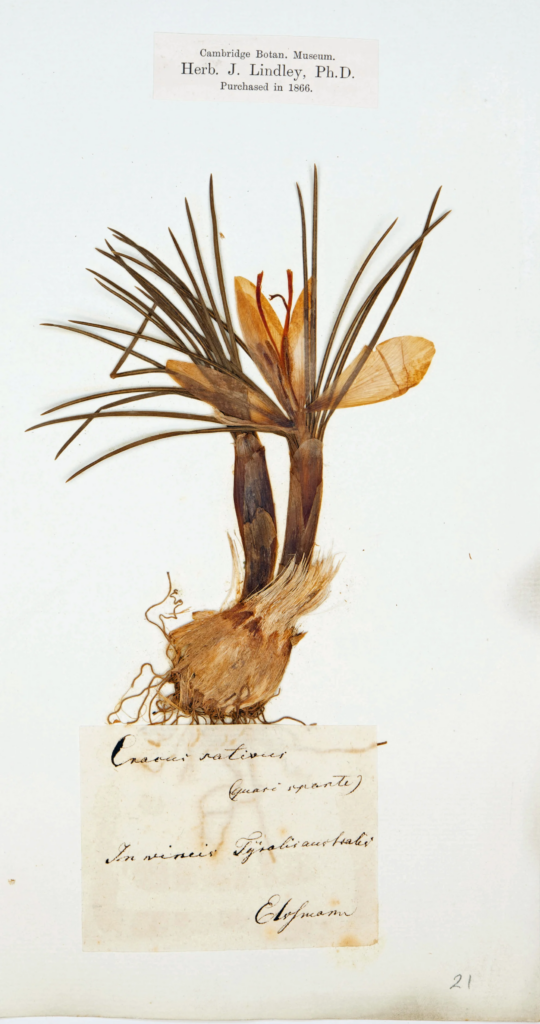
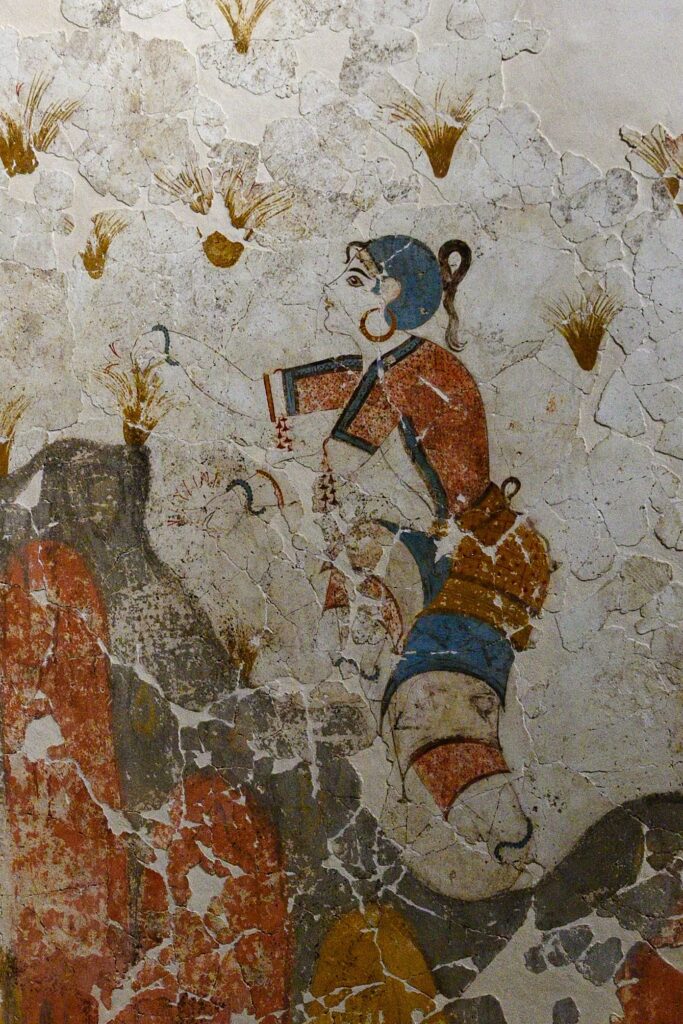
Saffron → Known in the Middle Ages by the Latin name crocus, this pigment later became known as saffron, reflecting Arab linguistic and trade influences. Saffron has held deep symbolic meaning across cultures—particularly in Buddhist traditions, where it is associated with enlightenment and monastic life. In medieval Europe, saffron was among the most important yellow colorants. Its production was extraordinarily labor-intensive: approximately 8,000 handpicked flowers were required to obtain just 100 grams of saffron threads. Originally referred to as “Persian yellow,” saffron was widely used not only as a pigment but also as a perfume, medicine, and dye, with documented use dating back to ancient Mesopotamia. Paint recipes were relatively simple: saffron strands were soaked in glair (egg white) and left to infuse. The resulting color was often mixed with blue pigments to create a range of green tones. → Explore this pigment in the INFRA-ART database.
Toxic, poisonous, and deadly pigments—yet beautiful
Historically prized for their opacity, brilliance, and handling properties, many traditional pigments were also highly toxic. Materials such as lead white, red lead, orpiment, and realgar played central roles in artistic practice for centuries, while posing serious health risks to artists and artisans.
Lead white → a basic lead carbonate, lead white has been used for over 2,000 years. It was traditionally produced by exposing metallic lead to vinegar vapors and carbon dioxide. Remarkably, this process remained largely unchanged from antiquity through the 19th century.
Red lead → used from Roman time thought the industrial era, this pigment was used extensively in medieval manuscripts. Known also as minium, (Latin miniare, ”to color with minium”), the term is now confined to the naturally occurring mineral. First known deposits came from the Minius River in north-west Spain.
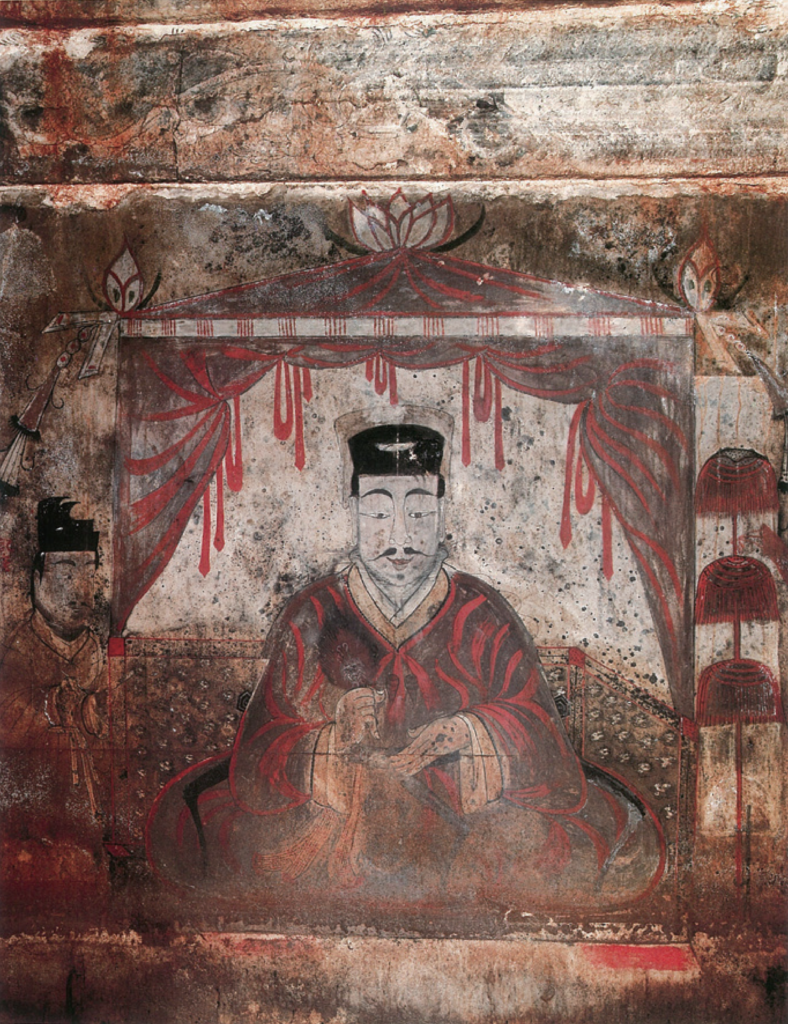
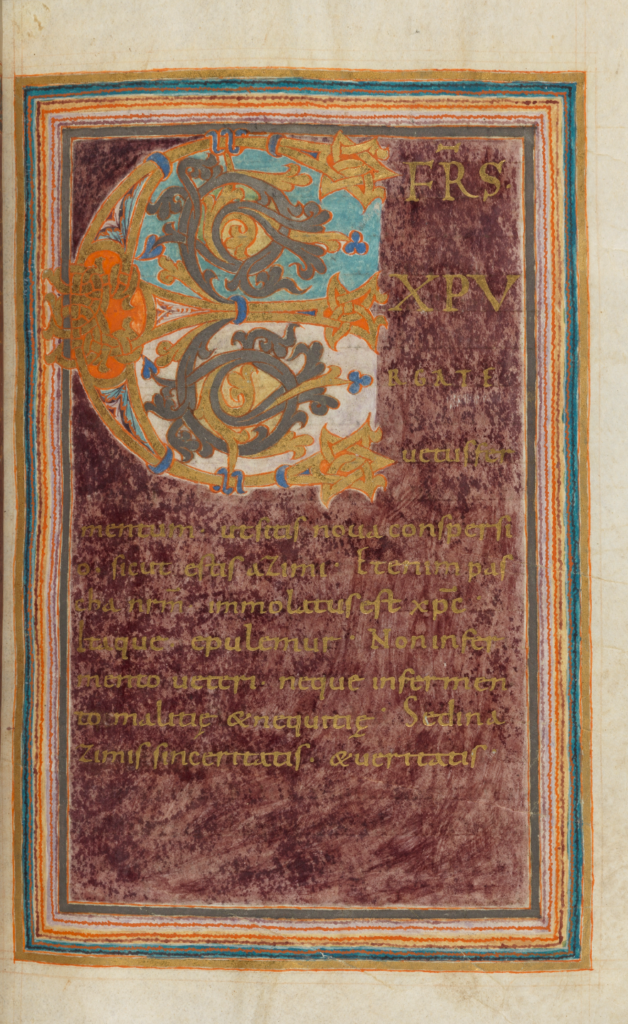
Lead-tin yellow → for centuries one of the most important yellow pigments in European art, lead-tin yellow was produced by heating lead and tin oxides at high temperatures (over 800°C). Two main types were used – Type I was the one most frequently used in paintings, as early as the 14th century in Europe, and Type II, initially used in the production of colored leaded glass in the Middle Ages.
Cinnabar → a mercury sulfide pigment, cinnabar was once referred to as “dragon’s blood.” It held strong symbolic and alchemical significance: mercury was believed to embody transformation, bridging opposites such as solid and liquid, earth and heaven, life and death.
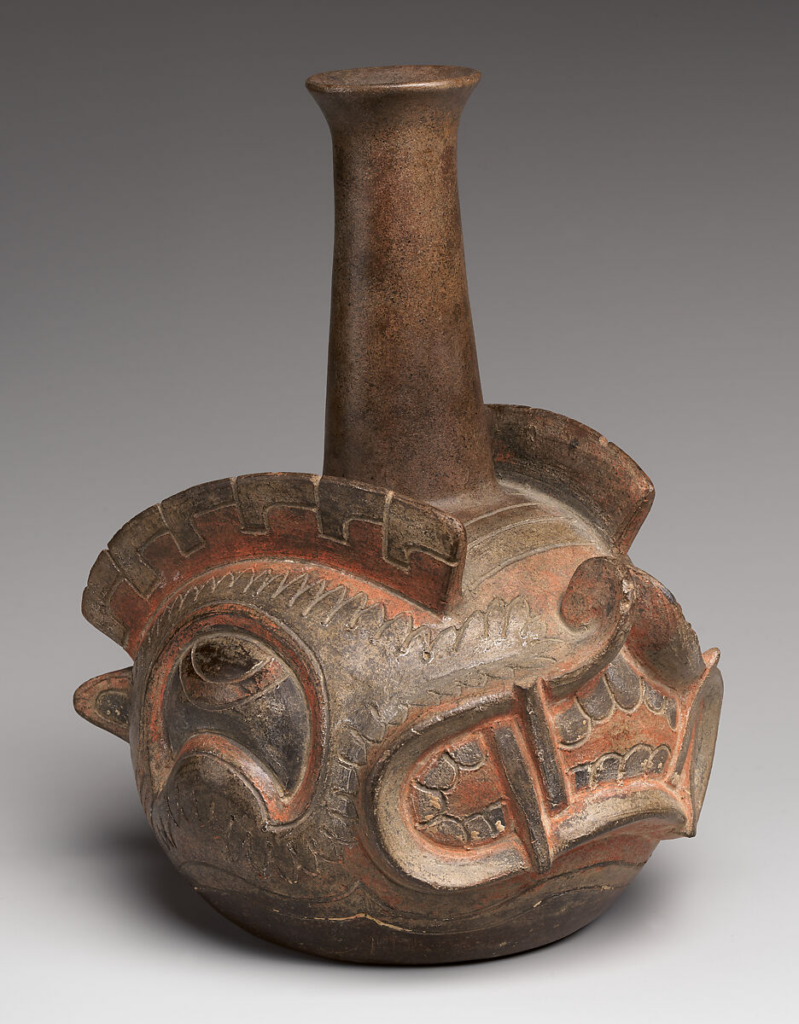
Orpiment → known by its Latin name auripigmentum (gold paint), it is a highly toxic arsenic sulfide. Despite its toxicity, it was used in ancient Egypt as a cosmetic, alongside other hazardous materials. As a pigment, it was employed for centuries, with the earliest documented use in Persia and across Asia. In Europe, however, its application was largely limited to manuscript illumination. Orpiment is chemically incompatible with many commonly used pigments—particularly lead-based ones such as lead white, and copper-based pigments like malachite—often causing them to darken or turn black.
Realgar → known as the ruby of arsenic (rahj-al-ghar Arabic for “powder of the mine”, Roman sandarach), it is extremely toxic, made of arsenic disulfide. Found in the same deposits as the arsenic-containing mineral orpiment, it most occurs in geothermal fissures near hot springs. Alongside orpiment, it was a significant item of the pigment trade in Ancient Rome.
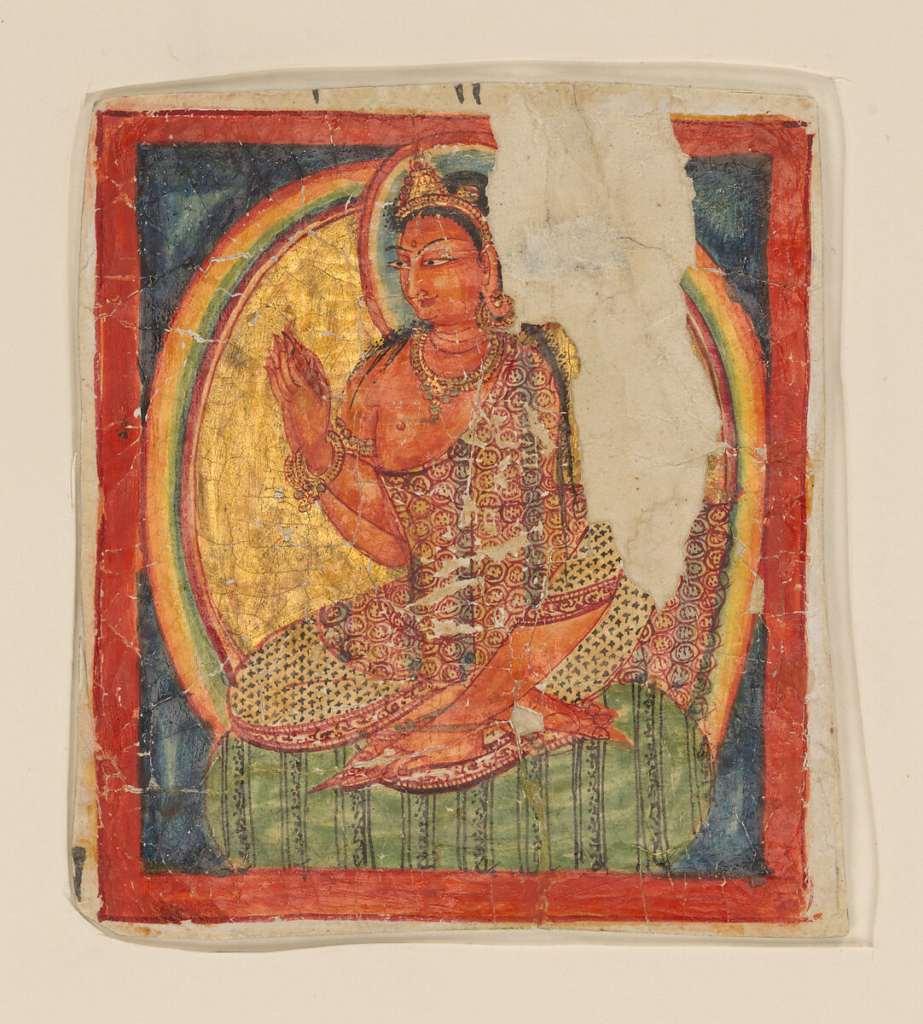
© Metropolitan Museum of Art

Journey of the Magi), c. 13th century.
© Fitzwilliam Museum
→ Discover the lead-based pigment collection available in the INFRA-ART database, along with other toxic and poisonous historical materials, using our recently launched advanced search, which allows users to filter results by multiple criteria.
Rare and other hard-to-find pigments
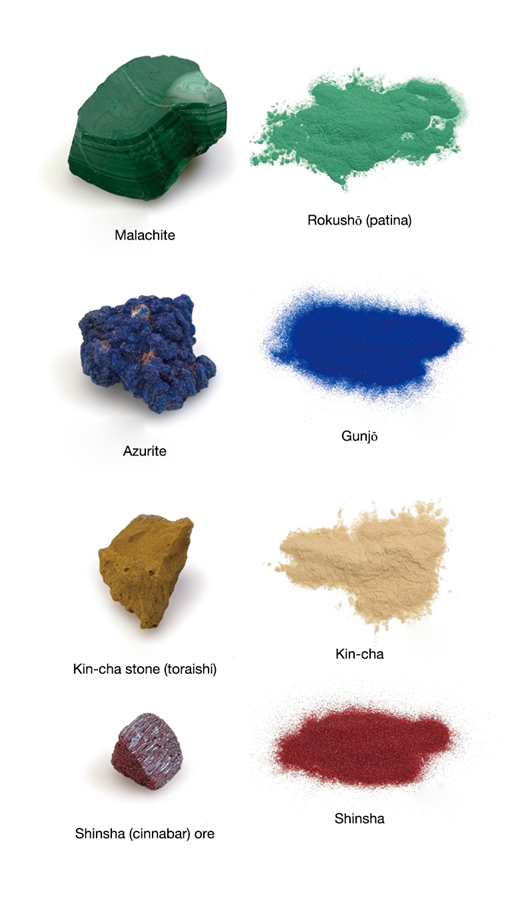
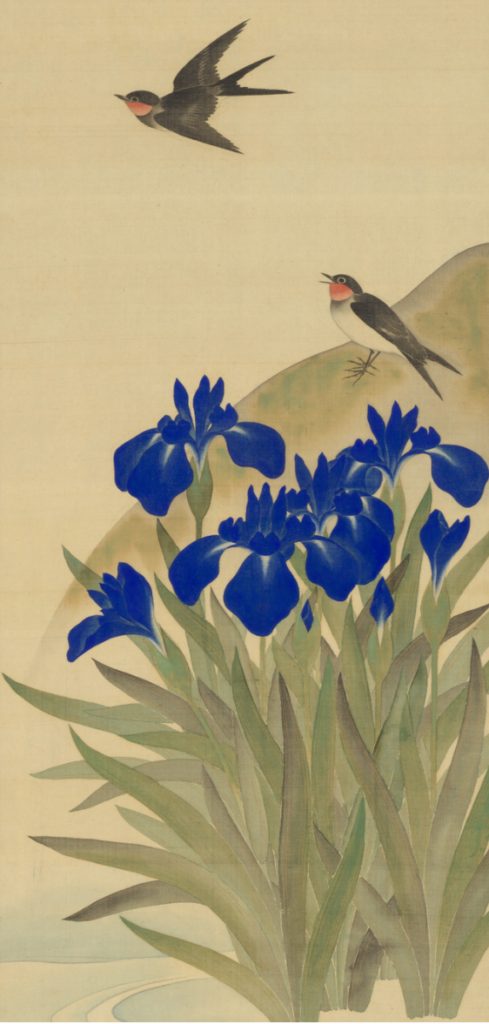
Iwa-enogu → Traditional Japanese mineral pigments produced from carefully ground natural minerals, Iwa-enogu pigments are central to the practice of Nihonga painting. Produced by crushing, washing, and grading natural minerals and gemstones, these pigments embody a direct connection to the geological origins of color. Materials such as azurite, malachite, garnet, coral, and amazonite are carefully selected, then pulverized and refined through a process of levigation (elutriation) that separates particles by size with exceptional precision. Unlike Western pigments that are often ground to a uniform fine powder, Iwa-enogu are intentionally sorted into distinct particle-size grades—typically numbered (e.g., No. 8, No. 10, No. 12), each corresponding to a specific grain size. This control over grain size allows artists to build depth and luminosity through layered application. Known for their exceptional quality and texture, they offer a rich palette derived from natural stones, several varieties of which are represented in the INFRA-ART database.
Colored earths from Iceland → In western Iceland, around the Snæfellsjökull volcano, naturally occurring mineral-rich soils produce a distinctive range of earth pigments shaped by volcanic activity and glacial influence. Collected and minimally processed, these pigments retain a natural, slightly granular texture and reflect the unique geology of the Icelandic landscape. → Explore Icelandic earth colors covered within the INFRA-ART database.
Volcanic and volcanically derived minerals → Sourced from the volcanic region of Mt. Vesuvius in Campania (Italy), INFRA-ART covers a collection of over 20 minerals that reflects the dynamic geology of one of Europe’s most active volcanoes. Formed through intense heat, eruption, and rapid cooling, the set spans a wide range of materials—from calcium sulfide and red quartz to volcanic ash and solidified lava. Together, they illustrate the diversity of volcanic processes, offering textures and colors shaped directly by eruption, crystallization, and mineral transformation.

Further reading and resources
Cennini, C., contributed by Herringham, C.J. (1899) The Book of the Art of Cennino Cennini. A contemporary practical treatise on Quattrocento painting, Routledge.
Coles, D. (2021) Chromatopia: An Illustrated History of Color, Thames & Hudson.
Eastaugh, N. et al. (2008) Pigment Compendium: A Dictionary and Optical Microscopy of Historical Pigments, 1st ed., Routledge.
FitzHugh, E.W. (1986) Red Lead and Minium. In “Artists’ Pigments: A Handbook of Their History and Characteristics”, vol. 1, ed. Feller, R.L., Archetype Publications, pp. 109-139.
FitzHugh, E.W. (1997) Orpiment and Realgar. In “Artists’ Pigments: A Handbook of Their History and Characteristics”, vol. 3, ed. FitzHugh, E.W., Archetype Publications, pp. 47-79.
Gettens, J.R, Feller, R.L. and Chase, W.T. (1993) Vermilion and Cinnabar. In “Artists’ Pigments: A Handbook of Their History and Characteristics”, vol. 2, ed. Roy, A, Archetype Publications, pp. 159-182.
Gettens, J.R, Kuhn, H. and Chase, W.T. (1993) Lead White. In “Artists’ Pigments: A Handbook of Their History and Characteristics”, vol. 2, ed. Roy, A, Archetype Publications, pp. 67-81.
Grovier, K. (2023) The Art of Colour: The History of Art in 39 Pigments, Yale University Press.
Kuhn, H. (1993) Lead-Tin Yellow. In “Artists’ Pigments: A Handbook of Their History and Characteristics”, vol. 2, ed. Roy, A, Archetype Publications, pp. 83-112.
Orna, M.V. (2022) March of the Pigments: Color History, Science and Impact, Royal Society of Chemistry.
Plesters, J. (1993) Ultramarine Blue, Natural and Artificial. In “Artists’ Pigments: A Handbook of Their History and Characteristics”, vol. 2, ed. Roy, A, Archetype Publications, pp. 37-65.
Viatkina, M. (2022, January 21) The most expensive colours and rarest pigments in the world: The art history alchemy of precious minerals, metals, flora and fauna. Medium. https://medium.com/hidden-gem/the-most-expensive-colours-and-rarest-pigments-in-the-world-c1774ae39c9d

How to cite this resource
Cortea, I.M. (2026, March 22). INFRA-ART spectral data collections: precious, poisonous, rare, and other hard-to-find pigments. INFRA-ART Blog. https://blog.infraart.inoe.ro/2026/03/22/infra-art-spectral-data-collections-precious-poisonous-rare-and-other-hard-to-find-pigments