

by Ioana Maria Cortea — Published on March 10, 2026 — Reading time: 8 min
Article sections
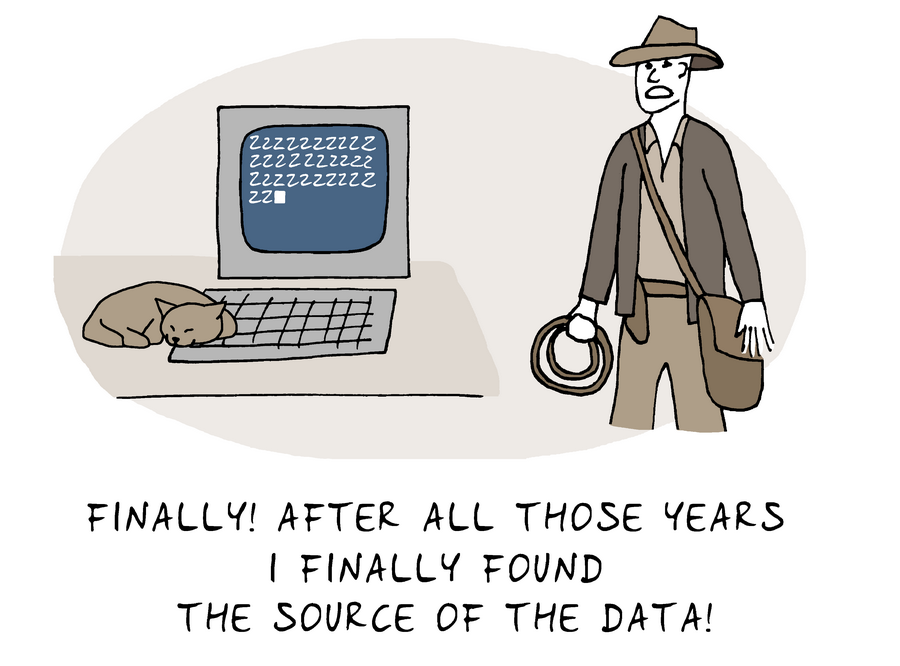
Every research project produces data: measurements, experimental results, documentation, and much more. Yet once a project ends or a paper is published, a large portion of this data often remains difficult to find, access, or reuse.
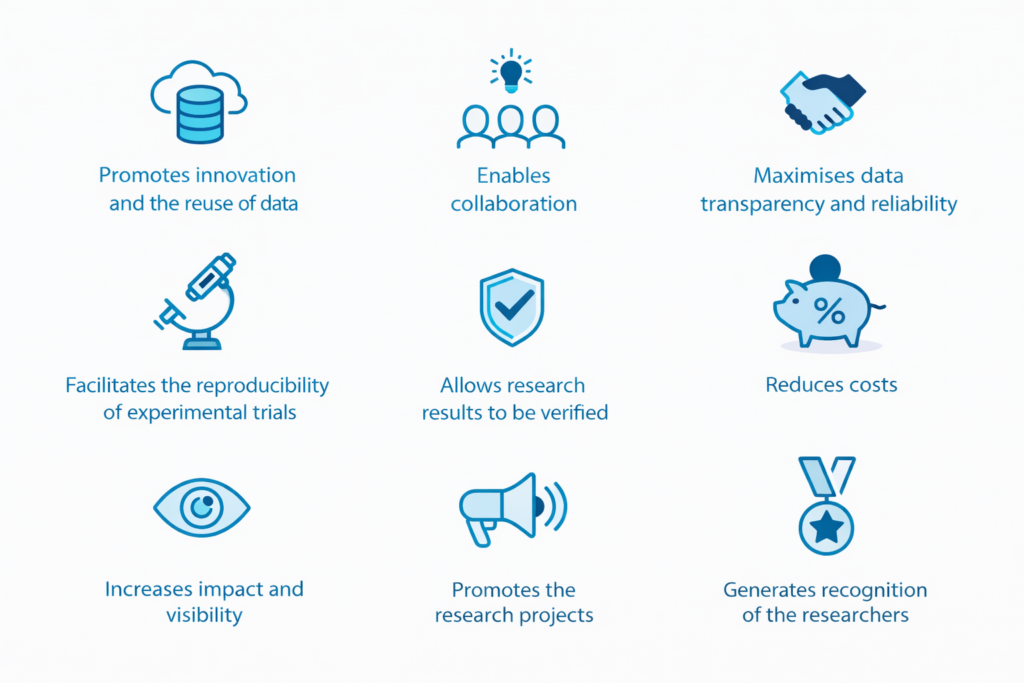
This represents a missed opportunity. Data sharing and reuse can significantly extend the impact of research by allowing new questions to be explored without repeating the same work. When datasets are accessible and well documented, researchers can build on previous efforts, compare results across studies, and develop new insights that would otherwise remain out of reach. At the same time, sharing data promotes transparency and collaboration, strengthening trust in scientific results. Another important benefit of data sharing is that it supports the wider dissemination of research, increasing its visibility and impact.
Despite these benefits, the adoption of data sharing and reuse practices varies widely across research communities. While some disciplines have established strong traditions of data sharing, others still face significant barriers.
Why sharing data is not always straightforward
Although open research data is now firmly embedded in policy agendas, it has yet to become a routine practice for many researchers. Despite notable progress, the transition toward open science has been slower than expected, particularly when it comes to data sharing. A 2017 study found that research data are most commonly disseminated as supplementary material attached to a research article or as a stand-alone publication in a data journal. By contrast, fewer than 15% of researchers publish their data in a data repository, while around 34% do not publish their data at all. Among researchers who share data, the vast majority (over 80%) share with direct collaborators, while 39% share with external partners. However, only 14% share data with researchers they do not know while a project is ongoing.
The main challenge is often not a lack of willingness. Many researchers recognise the value of making their data available to others. Instead, the barriers often reflect broader structural limitations within the research ecosystem. One important factor is the way research contributions are evaluated. Academic careers are still largely built around publications, citation counts, and journal impact metrics. Preparing datasets for sharing—documenting them carefully, adding metadata, and ensuring they can be interpreted by others—requires time and expertise. Yet these efforts are rarely rewarded in traditional research assessment systems. As a result, researchers may have little incentive to invest in making their data reusable, even when doing so could benefit the wider community.
Legal and ethical considerations can also complicate the picture. Some datasets contain sensitive information, involve intellectual property constraints, or require careful handling due to cultural or privacy concerns. In these cases, open sharing may not always be possible. Importantly, however, sharing does not necessarily mean making everything fully open. The principles of good data management emphasize that data should be as open as possible and as closed as necessary. Even when data cannot be freely shared, clear metadata and documentation can still allow others to discover the existence of the dataset and understand how it might be accessed or reused under appropriate conditions.
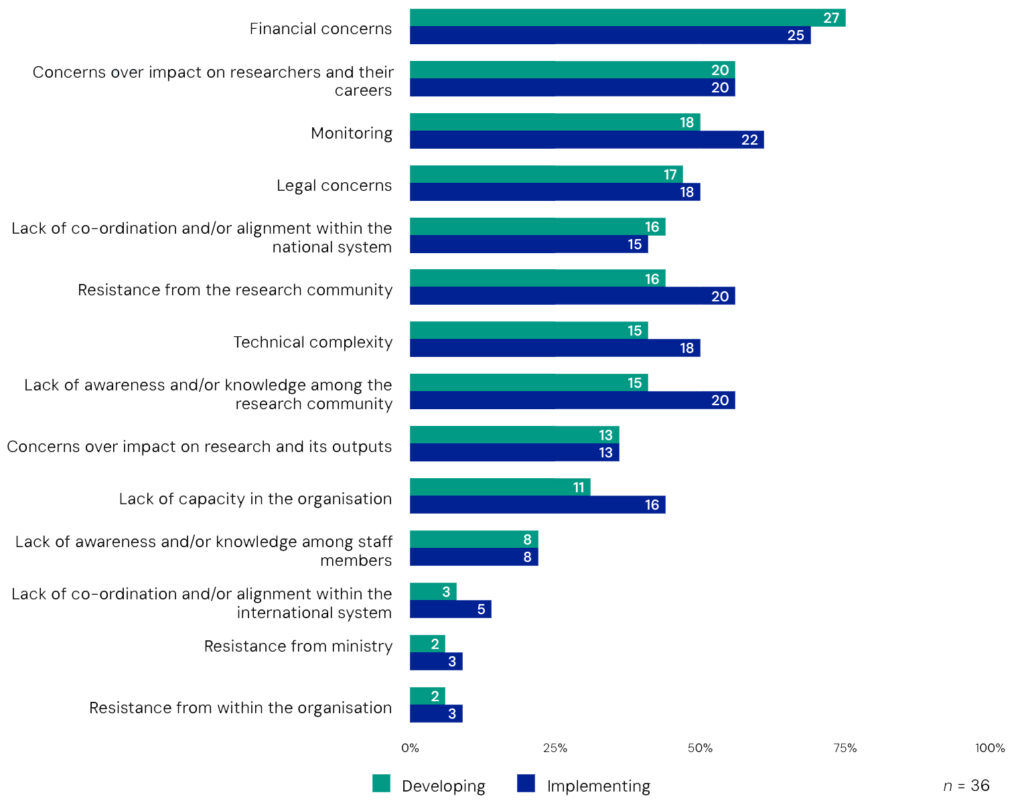
Infrastructure also plays a crucial role in enabling both sharing and discovery. In many fields, data repositories, metadata standards, and interoperable systems are still developing. Without reliable infrastructures for storing, documenting, and connecting datasets, valuable research outputs remain scattered across institutional servers, personal storage devices, or supplementary files attached to publications.
Even when data are shared, another challenge often remains: finding them. Over the past decade, the number of research data repositories and deposited datasets has grown dramatically, yet researchers still report difficulties locating data that are relevant to their work. This gap between data availability and data discoverability often stems from inconsistent metadata, fragmented repositories, and search systems that do not always match the ways researchers actually look for data. Improving discovery therefore becomes a crucial step in turning shared data into reusable knowledge.
Changing incentives in the research ecosystem
Data sharing and reuse are shaped not only by technology and infrastructure, but also by the incentives that guide research practices. Initiatives such as the Coalition for Advancing Research Assessment (CoARA) are calling for broader approaches to evaluating research. Traditional assessment systems still rely heavily on publication-based indicators, which overlook many important contributions to science—including datasets, software, and open research practices, among others.
Recent studies highlight that recognition of open science activities in research assessment is still uneven. While some organisations have started to include open science contributions when evaluating researchers’ track records, this is not yet standard practice across the research system. In many cases, open science activities are considered only when researchers describe them in narrative sections of their CVs or applications, rather than through dedicated evaluation criteria. At the same time, the most consistently recognised practices remain those that are already well established—such as open access publications.
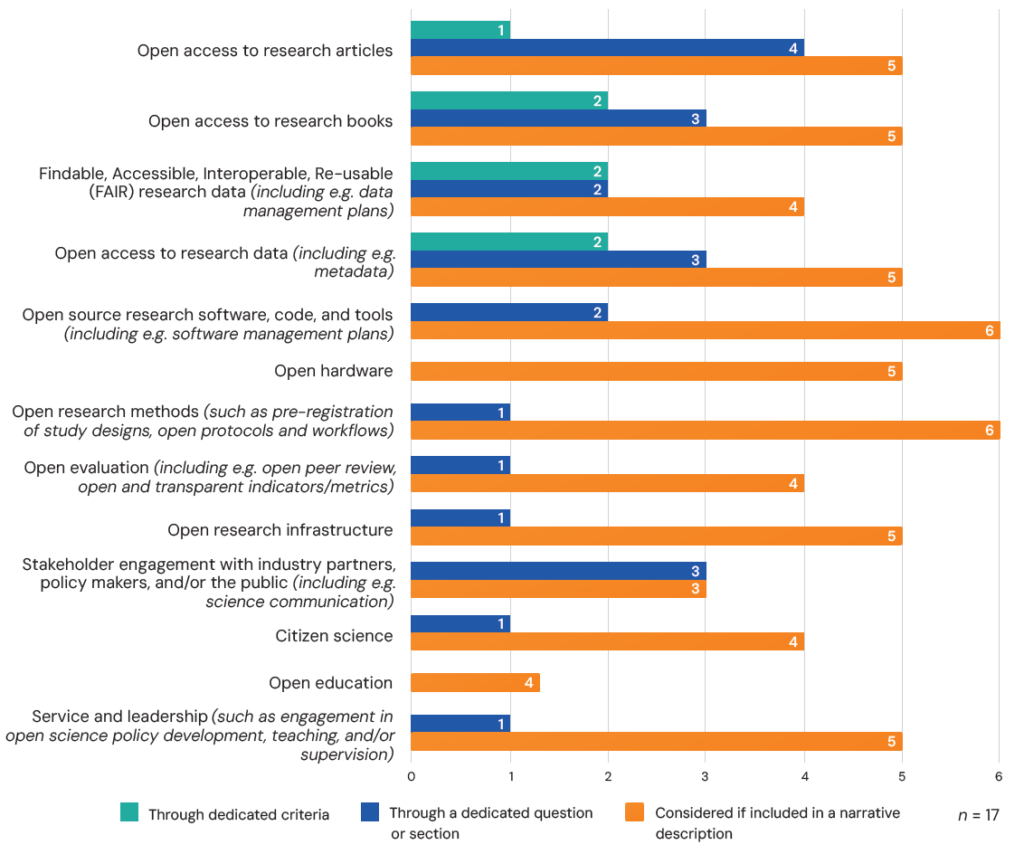
Reforming research assessment means recognising a wider range of open science outputs as valuable contributions in their own right. When institutions and funders acknowledge the effort involved in curating and sharing research data, they create stronger incentives for researchers to invest in making their data reusable. Supporting these broader forms of contribution requires not only new evaluation practices, but also infrastructures that make them visible and accessible. Open research infrastructures—community-governed platforms that support data sharing, discovery, and interoperability—are increasingly seen as a critical part of this transformation.
The importance of making data FAIR
Sharing data alone is not enough. For data to be truly useful, it must also be understandable and reusable. This requires sharing data in ways that ensure quality and interoperability, supported by clear standards and documentation that make data intelligible both within and across disciplines.
This is where the FAIR principles come into play. FAIR data practices encourage researchers to describe their datasets with clear metadata, use common standards and identifiers, and provide enough context for others to interpret the data correctly. When these practices are in place, datasets become part of a broader knowledge network. Researchers can connect information across projects, combine datasets from different sources, and develop new research questions that were not originally anticipated.
In fields like heritage science, this is particularly important. Research data can include highly diverse materials: imaging data, analytical measurements, conservation documentation, historical records, and more. Ensuring that such heterogeneous datasets remain usable over time requires careful documentation, shared vocabularies, and infrastructures that support long-term access and interoperability.
Building a culture of data sharing and reuse
Improving data sharing and reuse is not only a technical challenge but also a cultural one. Researchers need clear incentives to invest time in preparing their data for reuse. Institutions and funders need policies that recognise datasets and other research outputs as valuable scholarly contributions. At the same time, sustainable infrastructures are needed to support the long-term preservation, discovery, and interoperability of research data.
When data are easier to discover, access, and reuse, they become part of a broader knowledge network—one where research outputs continue to generate value over time. In this way, data sharing and reuse are not just about preserving information. They are about unlocking new opportunities for collaboration, innovation, and discovery, ensuring that the knowledge generated today can support the research questions of tomorrow.

Further reading and resources
Arentoft, M. et al. (2022) Agreement on Reforming Research Assessment. Zenodo. https://doi.org/10.5281/zenodo.13480728
Berghmans, S., et al. (2017) Open Data: The Researcher Perspective, Elsevier. https://www.elsevier.com/about/open-science/research-data/open-data-report
Borgman, C.L. (2012) The conundrum of sharing research data. Journal of the American Society for Information Science and Technology, 63(6): 1059-1078. https://doi.org/10.1002/asi.22634
FIDELIS (2026, Mar 5) Overcoming (perceived) barriers to reuse of research data: Cultural and educational aspects (Part 1). YouTube. https://www.youtube.com/watch?v=3F7FTDngkkE
Kuchma, I., Tzouganatou, A., CoARA WG on OI4RRA (2025) Transitioning to Open Infrastructures for Responsible Research Assessment: Barriers, Enablers, and Strategic Recommendations. Zenodo. https://doi.org/10.5281/zenodo.17416348
Landi, A. et al. (2020) The “A” of FAIR: As Open as Possible,as Closed as Necessary. Data Intelligence, 2(1-2): 47–55. https://doi.org/10.1162/dint_a_00027
Mauthner, N.S., Parry, O. (2013) Open Access Digital Data Sharing: Principles, Policies and Practices.Social Epistemology, 27: 47–67. https://doi.org/10.1080/02691728.2012.760663
Morris, J., Saenen, B. (2024) Strategic Approaches to, and Research Assessment of, Open Science. Science Europe. https://doi.org/10.5281/zenodo.13961124
Staunton, C. et al. (2021) Open science, data sharing and solidarity: Who benefits? History and Philosophy of the Life Sciences, 43: 115.
Park, H., Wolfram, D. (2017) An examination of research data sharing and re-use: implications for data citation practice. Scientometrics, 111: 443-461. https://doi.org/10.1007/s11192-017-2240-2
Piwowar, H. (2011) Who shares? Who doesn’t? Factors associated with openly archiving
raw research data. PLoS ONE, 6(7): e18657. https://doi.org/10.1371/journal.pone.001865
Tedersoo, L. et al. (2021) Data sharing practices and data availability upon request differ across scientific disciplines. Scientific Data, 8: 192. https://doi.org/10.1038/s41597-021-00981-0
Wu, M. et al. (2026) Bridging the Data Discovery Gap: User-Centric Recommendations for Research Data Repositories. Data Science Journal, 25: 6. https://doi.org/10.5334/dsj-2026-006

How to cite this resource
Cortea, I.M. (2026, March 10). Where is the data? Challenges and barriers to research data sharing and reuse. INFRA-ART Blog. https://blog.infraart.inoe.ro/2026/03/10/where-is-the-data-challenges-and-barriers-to-research-data-sharing-and-reuse/