by Ioana Maria Cortea — Last updated on December 18, 2025 — Reading time: 6 min
As 2025 comes to a close, we take a moment to reflect on a year of significant progress for the INFRA-ART Spectral Library. Over the past twelve months, INFRA-ART has evolved in both scale and maturity, combining advances in FAIR alignment and technical infrastructure with the continued growth of its spectral collections and international user community.
This year marked an important transition from foundational development to consolidation and sustainability. Through targeted FAIR support actions, major infrastructure upgrades, and a strong focus on openness and reuse, INFRA-ART has taken concrete steps toward becoming a more robust, interoperable, and community-driven data service. Below, we highlight the key milestones that shaped our journey in 2025 and set the stage for the year ahead.
Advancing Our FAIR Journey
Our FAIR journey in 2025 was marked by major strategic steps that strengthened the INFRA-ART Spectral Library’s commitment to openness, transparency, and long-term sustainability. What began early in the year as a focused effort to improve FAIR alignment quickly expanded into a multi-layered transformation touching metadata quality, repository trustworthiness, interoperability, and data governance.
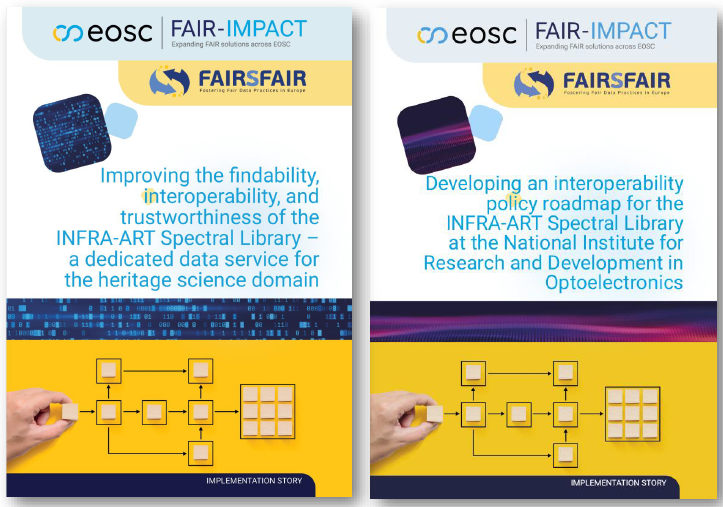
In February, we officially began our FAIR journey with support from the FAIR-IMPACT project, laying the groundwork for structured, standards-driven improvements across our metadata, workflows, and governance practices. Between June and October, additional support from the RDA TIGER initiative accelerated this work, helping us refine our FAIR implementation strategies, strengthen semantic interoperability, and deepen alignment with international best practices. In parallel, our participation in a FIDELIS pilot support action provided valuable guidance on enhancing repository transparency, trustworthiness, and user-centred governance—core elements that underpin both FAIR and TRUST principles.
Together, our participation in these support actions was pivotal in advancing the long-term sustainability, usability, and interoperability of our data services, strengthening INFRA-ART’s alignment with the European Open Science Cloud (EOSC) and other open infrastructures, and contributing to improved data discoverability—a trend reflected in a measurable rise in new users according to Google Analytics. More insights on this impact will be shared in an upcoming blog article next year.
A Major Boost in FAIR Maturity
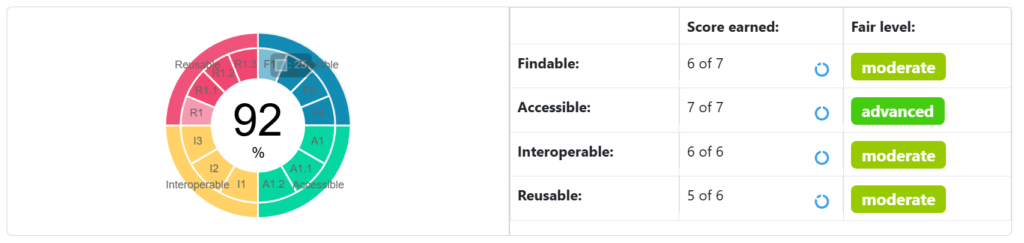
One of the most significant achievements of 2025 was the substantial increase in the FAIR maturity of the INFRA-ART data service. This improvement was not simply a numerical gain, but the result of coordinated efforts across metadata curation, documentation, interoperability, and governance. Our FAIR score rose from an initial baseline to over 90% (based on the F-UJI assessment), reflecting concrete advances in findability, accessibility, interoperability, and reusability of our datasets. These improvements directly enhance the ability of both humans and automated systems to discover, interpret, and reuse our datasets. In parallel, we strengthened technical and semantic alignment with EOSC, positioning INFRA-ART as a more integrated contributor to the wider research infrastructure ecosystem. This progress lays essential groundwork for future automation, cross-platform integration, and participation in open research workflows.
Expanding our spectral collections
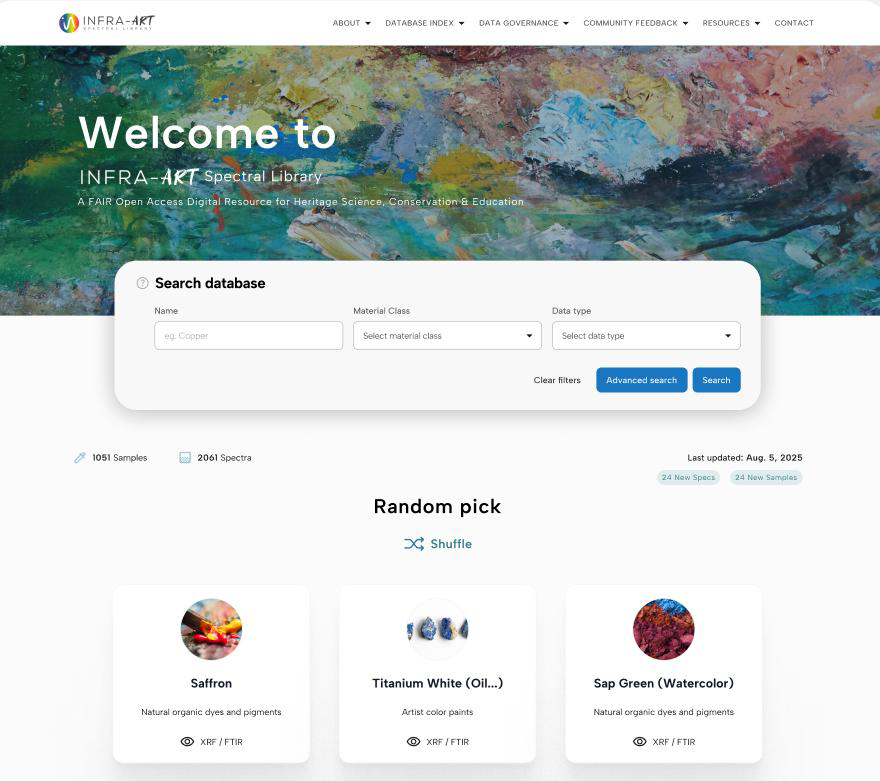
The INFRA-ART spectral collections continued to grow significantly in both scale and diversity throughout 2025, further reinforcing the database’s role as a reference resource for heritage science and spectral research. During the year, we added more than 340 new spectra, and over 100 new reference samples. The newly added materials cover a wide range of categories, including historic and modern pigments as well as rare volcanic minerals, among others. This diversity enhances the library’s applicability across multiple analytical and research contexts. As a result of the updates, the INFRA-ART database now hosts over 1,000 reference materials, marking a key milestone in its evolution. This expanding corpus supports comparative analysis, and cross-disciplinary research, while providing a strong foundation for future enrichment. Additional data releases are planned for early 2026!
Redesigning the Database Architecture
One of the most important—but largely behind-the-scenes—milestones of 2025 was the full redesign of the platform’s architecture, moving away from a monolithic structure to a modern backend–API–frontend architecture. This shift was driven by the need for greater scalability, interoperability, and long-term sustainability. The new infrastructure is built around a dedicated REST API, which enables machine-actionable metadata exposure, supports advanced search and analytical tools, and prepares the platform for seamless integration with EOSC and other European research infrastructures. A redesigned frontend delivers a more robust and user-friendly experience, while a dedicated content management system simplifies administration and future updates. Beyond performance and usability improvements, this architectural upgrade lays the foundation for future developments: richer analytical functionality, automated data exchange, and smoother integration with external services and aggregators. In short, it ensures that INFRA-ART is not only fit for current needs, but technically prepared for growth, interoperability, and innovation in the years ahead. The official launch of the new platform is scheduled for early January 2026!
Strengthening Knowledge Sharing and Community Outreach
Alongside technical and data-driven developments, 2025 marked a stronger focus on communication, training, and community engagement as essential components of a sustainable FAIR data service. To ensure long-term open access to project outputs, we established the INFRA-ART Zenodo Community as a central, trusted space for sharing materials generated throughout the lifetime of the INFRA-ART project. The Zenodo Community hosts a wide range of resources, including project deliverables, documentation, related research outputs and, starting with next year, spectral datasets. By aggregating these materials in a single, citable location, we support transparency, traceability, and long-term reuse. This initiative strengthens INFRA-ART’s commitment to open science by making project outputs easily accessible beyond the lifetime of individual activities and ensuring that they remain connected to the broader scholarly ecosystem.
Equally important is understanding how the INFRA-ART database is used in practice. In 2025, we launched a community feedback survey to gather insights into user background, needs, and expectations. The survey was designed to inform future development decisions, including interface improvements, functionality enhancements, and content curation strategies. By actively seeking user input, we aim to ensure that INFRA-ART continues to evolve in ways that reflect real research and professional workflows. The survey remains open, and we warmly encourage researchers, practitioners, and other stakeholders to share their perspectives and experiences.
Looking Ahead to 2026
The achievements of 2025 have laid a strong foundation for the next phase of INFRA-ART’s development. With new spectral data releases, the official launch of a redesigned web platform, and continued FAIR- and TRUST-focused enhancements, 2026 promises to be a year of both consolidation and innovation. We will continue to place the community at the centre of our work—using feedback, usage insights, and collaboration to guide future priorities and ensure that INFRA-ART remains responsive to real research and professional needs. To our collaborators, supporters, and community members: thank you for being part of this journey!